
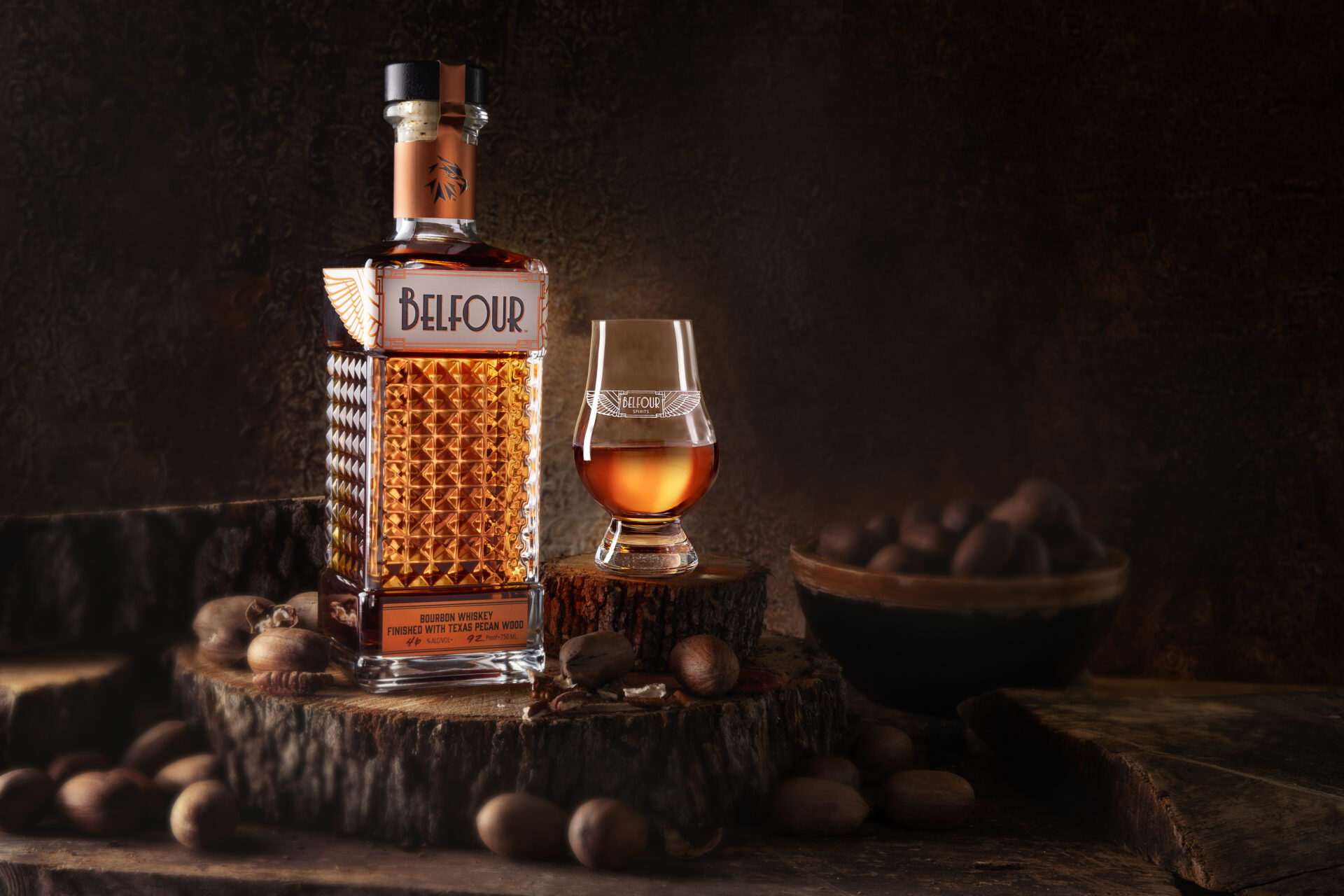
Is older bourbon always better? Does bourbon have to come from Kentucky? Is expensive whiskey worth the price? Despite bourbon’s long history, plenty of misconceptions still surround America’s signature whiskey.
From aging and barrel selection to how bourbon should be served, separating fact from fiction can help you better understand what’s in your glass.
At Belfour Spirits, we believe enjoying great whiskey starts with appreciating the craftsmanship behind it, not following a strict set of rules.
Here are seven common bourbon myths worth clearing up.
1. Myth: Bourbon Has to Be Made in Kentucky
Fact: Bourbon can be produced anywhere in the United States.
Kentucky has an undeniable connection to bourbon history, but bourbon isn’t exclusive to the Bluegrass State.
According to the Alcohol and Tobacco Tax and Trade Bureau (TTB), bourbon must meet specific federal production standards.
To qualify as bourbon, whiskey must:
- Be produced in the United States
- Be made from a grain mash containing at least 51% corn
- Be distilled at no more than 160 proof
- Enter new, charred oak containers at no more than 125 proof
- Be bottled at no less than 80 proof
- Contain no added coloring or flavoring materials
These requirements apply whether the whiskey is made in Kentucky, Texas, Tennessee, or elsewhere in the country.
Bottom line: Kentucky is famous for bourbon, but geography alone doesn’t determine bourbon quality.
2. Myth: Older Bourbon Is Always Better
Fact: More time in the barrel doesn’t automatically produce better whiskey.
A 15-year-old bourbon might sound more impressive than a 4-year-old bourbon, but age alone doesn’t guarantee superior flavor.
As whiskey matures, it interacts with the oak barrel, developing aromas and flavors associated with vanilla, caramel, toasted wood, and spice.
However, aging is a balancing act.
Too much barrel influence can introduce excessive oakiness, bitterness, or tannins that overwhelm other flavors.
The final result depends on several factors, including barrel char, warehouse temperature, mash bill, and blending decisions.
At Belfour Spirits, the process of developing whiskey involves careful attention to those details.
Our approach to Small Batch whiskey production allows Ed Belfour and the team to experiment with mash bills, barrel toasting, charring, and blending to develop distinct expressions.
Bottom line: A well-balanced younger bourbon can be just as enjoyable as an older expression.
3. Myth: Expensive Bourbon Always Tastes Better
Fact: Price and quality aren’t necessarily the same thing.
Some bottles of bourbon sell for hundreds or even thousands of dollars. But does a higher price guarantee a better drinking experience?
Not necessarily.
Whiskey prices can reflect factors such as rarity, production costs, packaging, limited availability, and brand recognition.
While certain premium releases offer exceptional craftsmanship, a higher price tag doesn’t mean a whiskey will suit everyone’s palate.
One person might prefer rich notes of oak and baking spice, while another enjoys sweeter flavors of caramel, vanilla, and maple.
For example, Belfour Small Batch Straight Bourbon is a 107-proof expression blended from custom-toasted and charred barrels.
Its tasting profile includes brown sugar, maple syrup, caramel, toasted oak, and a lingering toasted marshmallow finish.
Those characteristics tell you far more about the experience than price alone.
Bottom line: The best bourbon is one you genuinely enjoy, regardless of its price.
4. Myth: Bourbon Should Only Be Drunk Neat
Fact: There is no single correct way to drink bourbon.
Whiskey enthusiasts can be passionate about how bourbon should be served.
Some insist that bourbon must be enjoyed neat, without ice, water, or mixers.
Others prefer a chilled glass or a classic cocktail.
The truth is that different serving methods can highlight different characteristics.
Neat: Enjoy bourbon without dilution to experience its aroma, body, and flavor as bottled.
With water: A small amount of water can change the release and perception of certain aromatic compounds.
On the rocks: Ice chills the bourbon and gradually dilutes it, changing how the alcohol and flavors are perceived.
In a cocktail: Bourbon provides a flavorful foundation for classics like the Old Fashioned, Manhattan, and Whiskey Sour.
Even the glass you choose can influence how you experience a whiskey’s aroma.
At Belfour Spirits, our philosophy is simple: enjoy whiskey in a way that works for you.
Bottom line: Whether you prefer bourbon neat, on the rocks, or mixed into a cocktail, personal preference comes first.
5. Myth: Bourbon and Whiskey Are Completely Different Spirits
Fact: All bourbon is whiskey, but not all whiskey is bourbon.
Whiskey is a broad category of distilled spirits made from fermented grains.
Bourbon is a specific type of American whiskey that must meet additional production requirements.
Other whiskey categories include rye, Scotch, Irish whiskey, and various American whiskey styles.
One of the most important distinctions between bourbon and rye is the grain mash.
Bourbon must contain at least 51% corn, while American rye whiskey must contain at least 51% rye.
These differences often contribute to distinctive flavor profiles.
Bourbon frequently features sweeter notes such as caramel, vanilla, and brown sugar.
Rye whiskey is often associated with peppery spice, baking spices, and herbal characteristics.
Both styles offer plenty of variation depending on production and maturation.
Interested in exploring the difference yourself? The Belfour Spirits 200mL Whiskey Trio includes Small Batch Straight Bourbon, Rye Whiskey, and Pecan Wood Finished Bourbon, making it an approachable way to compare three distinct expressions.
Bottom line: Bourbon is a type of whiskey, with its own specific production standards and characteristics.
6. Myth: Darker Bourbon Means Better Bourbon
Fact: Whiskey color doesn’t necessarily indicate quality.
A rich amber color is one of bourbon’s most recognizable characteristics.
But darker doesn’t automatically mean older, more flavorful, or higher quality.
Bourbon develops its natural color through contact with charred oak during maturation.
Factors such as barrel char, aging conditions, and the length of time spent in the barrel can influence its appearance.
Two bourbons aged for the same number of years may have noticeably different colors.
Likewise, a lighter bourbon may offer just as much complexity as a darker expression.
Rather than judging whiskey solely by appearance, pay attention to its aroma, palate, mouthfeel, and finish.
Bottom line: Color is part of bourbon’s character, but it doesn’t determine whether a whiskey is good.
7. Myth: Bourbon Keeps Aging After It’s Bottled
Fact: Bourbon stops barrel-aging once it’s bottled.
Unlike whiskey resting inside an oak barrel, bottled bourbon is no longer undergoing the same maturation process.
The TTB defines whiskey age by the time spent in qualifying oak containers before bottling.
That means a 5-year-old bourbon doesn’t become a 15-year-old bourbon simply because it sits unopened on a shelf for another decade.
However, storage still matters.
Exposure to sunlight, excessive heat, and oxygen can affect whiskey quality over time, especially after a bottle has been opened.
To help preserve bourbon:
- Store bottles upright
- Avoid direct sunlight
- Keep bottles away from extreme temperatures
- Make sure caps and corks are securely closed
- Store whiskey in a stable environment
For more information on proper storage, explore the Belfour Spirits article Does Whiskey Go Bad?, which explains how to care for your whiskey collection.
Bottom line: Bourbon ages in the barrel, not in the bottle.
What Actually Makes a Great Bourbon?
After separating fact from fiction, one thing becomes clear: great bourbon isn’t defined by its age, price, color, or where it was produced.
It’s the result of decisions made throughout the whiskey-making process.
From grain selection and fermentation to distillation, barrel selection, aging, and blending, each step helps shape the finished spirit.
At Belfour Spirits, this attention to detail is part of our approach to crafting whiskey.
Founded by legendary NHL goaltender Ed Belfour, the brand reflects his commitment to precision, hard work, and pursuing excellence.
Our Small Batch expressions provide opportunities to explore different mash bills, barrel treatments, and blending combinations, creating whiskey with its own distinct character.
Learn more about what small batch means at Belfour Spirits and how our approach differs from larger production methods.
Frequently Asked Questions About Bourbon
Does bourbon have to be made in Kentucky?
No. Bourbon can be produced anywhere in the United States as long as it meets federal production requirements, including a grain mash containing at least 51% corn and storage in new, charred oak containers.
Is older bourbon always better?
No. Aging influences bourbon’s flavor, but longer maturation doesn’t guarantee better quality. Barrel conditions, blending, and personal taste all contribute to the experience.
What is the difference between bourbon and whiskey?
Bourbon is a specific type of American whiskey. It must contain at least 51% corn and meet federal distillation, barrel, and bottling standards. Whiskey is a broader category that includes bourbon, rye, Scotch, and other styles.
Does bourbon have to age for two years?
Not all bourbon must age for two years. Regular bourbon has no specific minimum aging period, but straight bourbon must mature in new, charred oak containers for at least two years.
Is bourbon better neat or on the rocks?
Neither method is universally better. Drinking bourbon neat preserves its bottled strength, while ice changes the temperature and gradually dilutes the whiskey. The best method depends on personal preference.
Does bourbon get better with age in the bottle?
No. Bourbon does not continue barrel-aging after bottling. Proper storage helps preserve its existing character rather than developing additional maturity.
Does expensive bourbon taste better?
Not necessarily. Price can reflect scarcity, production costs, and demand, but a more expensive bourbon isn’t guaranteed to be more enjoyable.
Discover Your Next Favorite Whiskey With Belfour Spirits
Bourbon is rooted in history, tradition, and craftsmanship, but appreciating it doesn’t have to be complicated.
You don’t need the oldest bottle, the highest price tag, or a specific drinking ritual to enjoy great whiskey.
What matters most is understanding what you like and being open to discovering something new.
At Belfour Spirits, we’re passionate about creating whiskey that reflects the care, experimentation, and attention to detail behind every expression.
Whether you’re exploring bourbon for the first time or expanding your collection, there’s always more to discover.
Explore the Belfour Spirits Whiskey Collection and find a pour that fits your style.